The Natural History of an East Greenland Iceberg - from our iceberg and drone correspondent
An insight into the life ofan iceberg together with some great photos from our drone pilot.
Tim F - 11/07/2026
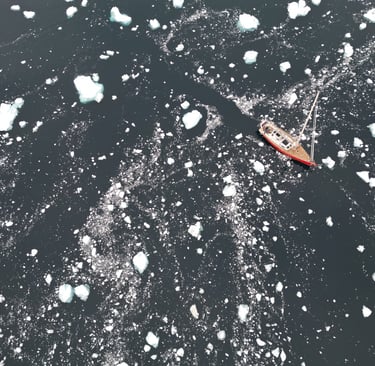
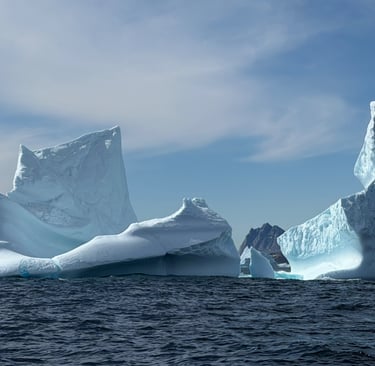
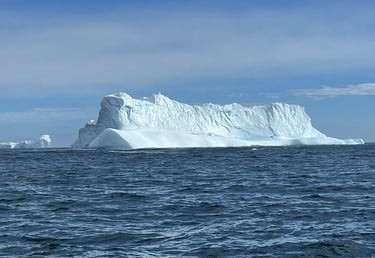
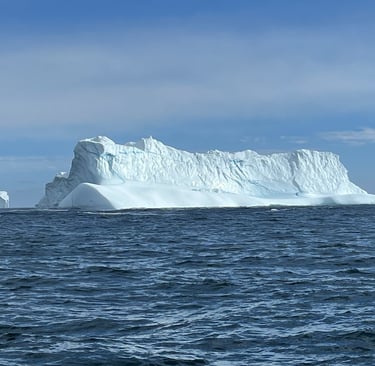
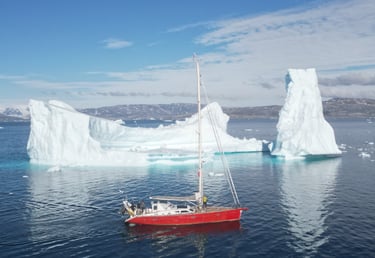
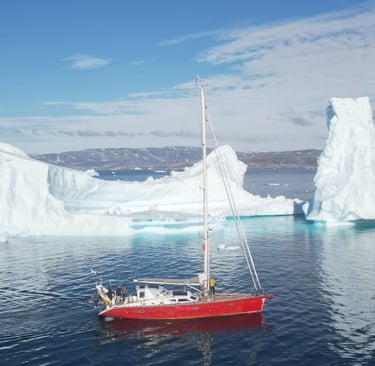
As we have travelled south along the East Coast of Greenland, one of the many outstanding features has been the many forms of ice we have both seen and heard. At times we have had to push our way through waterways congested with growlers and brash and at other times we have just been in awe at the beauty and variety of a series of vast icebergs. But where do they come from and where are they going?
An East Greenland iceberg begins its life high on the Greenland Ice Sheet, where snowfall accumulates over centuries. Under immense pressure, the snow is compressed into dense glacial ice, trapping countless tiny air bubbles from the ancient atmosphere. As the glacier slowly flows downhill under its own weight, it eventually reaches the sea, where great blocks of ice fracture from the glacier front in a dramatic process known as calving.
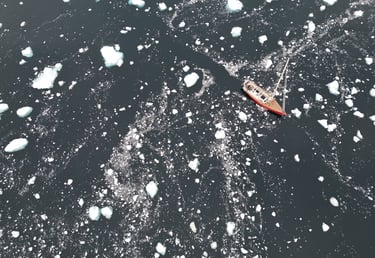
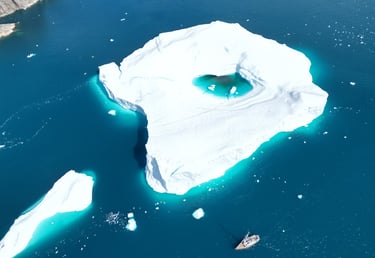
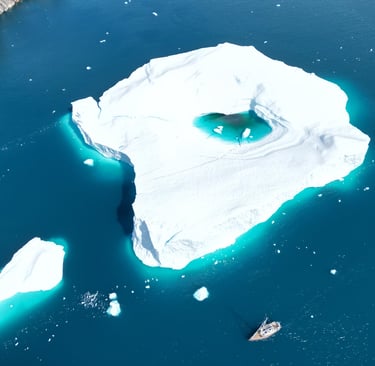
Freshly calved icebergs vary enormously in size, from small fragments to giants hundreds of metres long and rising over 100 metres above the sea. An iceberg is any floating piece of glacier ice extending more than 5 metres above sea level. Smaller fragments are classified as bergy bits, standing 1–5 metres high and covering 100–300 m², while the smallest are growlers, usually less than 1 metre above the surface and often no larger than a small boat. Growlers are particularly hazardous because almost all of their mass lies hidden beneath the water, making them difficult to detect on radar or in poor visibility.
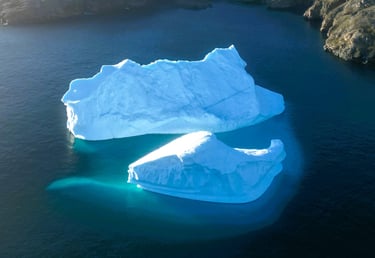
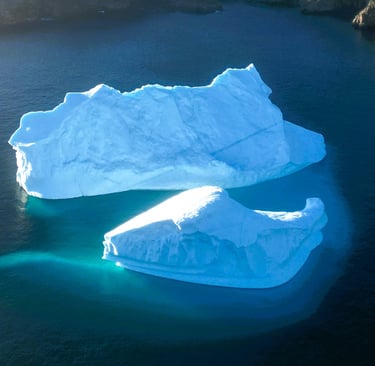
Although it is often said that only one-eighth of an iceberg is visible, the truth is more complicated. A tabular iceberg may extend five times its visible height below the surface, while older, eroded bergs may have almost equal height and depth. Their underwater shape frequently projects well beyond the visible outline, making it impossible to judge their true size from the surface alone.
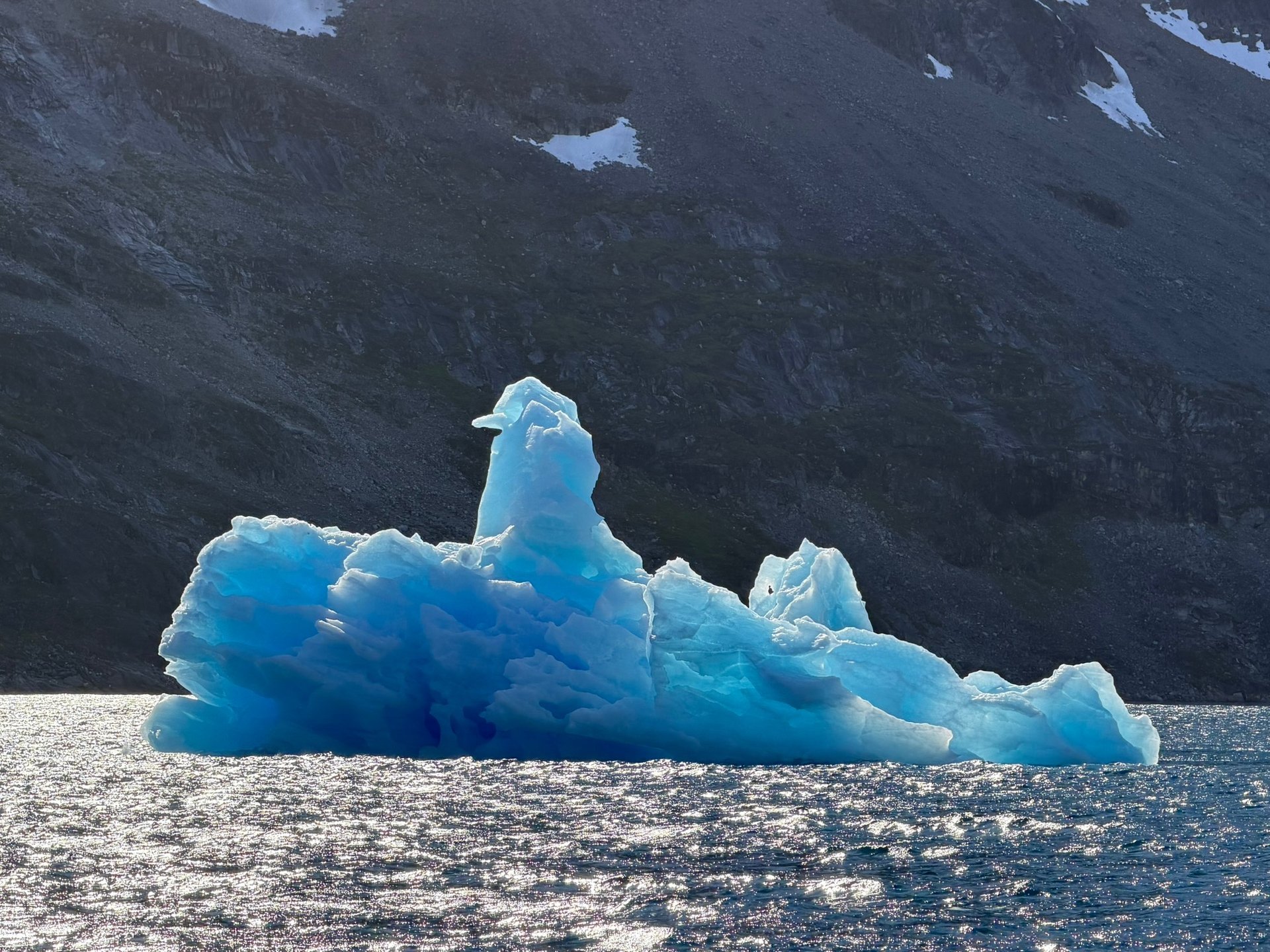
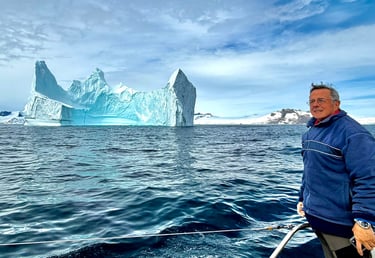
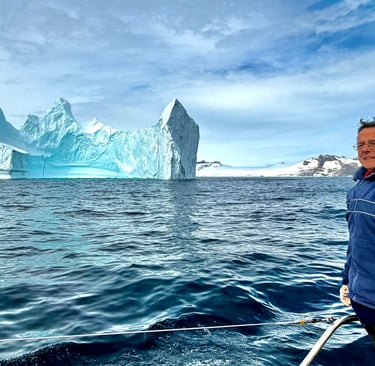
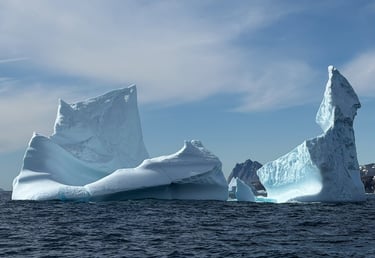
Many East Greenland icebergs display striking shades of blue. This colour occurs where the ice is exceptionally dense, having been compressed until almost all air bubbles have been squeezed out. Such ice absorbs the longer red wavelengths of sunlight while transmitting and scattering blue light. Blue bands often mark ancient crevasses that filled with meltwater before refreezing deep within the glacier.
The glaciers of Kangertittivaq (Scoresby Sund), Kangerlussuaq Fjord, and the great outlet glaciers farther north are among East Greenland's principal iceberg nurseries. Once afloat, most bergs become caught in the powerful East Greenland Current, drifting south at a leisurely pace. Large icebergs commonly take one to three years to travel the 2,000 km from their birthplace to Cape Farewell, often spending long periods trapped in winter sea ice or grounded on shallow banks before resuming their journey. Only a minority survive the entire passage.
The iceberg's final years are marked by relentless decay. Sunlight melts its upper surface while comparatively warm seawater erodes it from below, producing unstable overhangs. As we have observed, huge slabs may collapse without warning, bergy bits and growlers can break free explosively, and eventually the iceberg rolls over or disintegrates into brash ice. For mariners these dramatic events pose a significant hazard, which is why the various pilot books we are using recommend understanding ice behaviour and always maintaining a generous stand-off distance from icebergs, regardless of their apparent size. It is certainly wise advice.
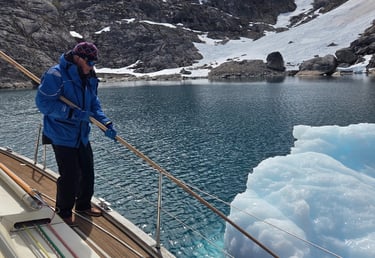
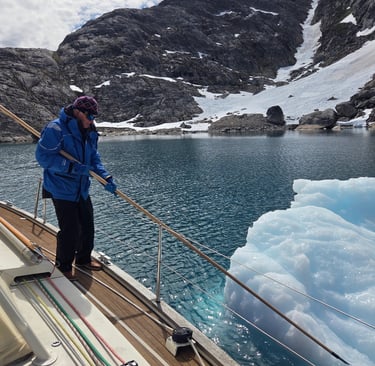
The author with Tuk
© 2026. All rights reserved.


Please check your inbox for an email request to verify your email