From your engineering correspondent - BC electronics part 2
More about our electronics!
Mark O: 17/06/2026
6/17/2026
I have a to-do list for the next couple of days alongside in Isjafjordur - checking the bow thruster battery charging, getting an engineer to change the water pump on the Eberspacher heater (the spare part is coming out on the crew changeover - much cheaper to buy in UK then source in Iceland) and fixing the skipper’s heads’ problem amongst others minor bits and pieces. But I also have time to do the next part of the introduction to Belle Colombe’s electronics for those who are interested. I know that for some of our followers much of this might seem rather specialist but I do know that some of the keener sailors might know what I am talking about about rather better than I do.
I have already covered what I call the household appliances but even more important are our navigation electronics. The yacht was originally configured with a Furuno suite of navigation electronics, including radar, depth sounders, GPS, AIS etc. They were all connected via an ethernet network called NavNet. A specialist marine PC was added and networked in so it could access the instrument data for passage planning - planning routes taking into account weather and the boat parameters.
Subsequent owners switched to a Raymarine system running over a SeaTalk network centred around an Axiom ChartPlotter- leaving in place the Furuno wind instruments, radar, AIS and GPS systems but not interfaced with the Raymarine (connecting SeaTalk and Navnet is another interesting challenge and not one I feel like rising to). We also have a Raymarine Quantum radar and a forward-looking mast mounted camera. So we now have a range of duplicate systems but with the Furuno systems no longer networked and so acting as standalone instruments. This can get confusing - for example you should not have both AIS systems running at the same time. Having a back-up radar is very useful and we prefer the Furono as it is mounted higher and gives us a better range. There is also a forest of antennae (and attendant network wiring) on the mast and on the rear of the boat. We could almost be mistaken for a Russian spy ship.
At the chart table we stripped out the old PC which was redundant and have switched to an iPad with a repeater screen. We have also added something called a DigitalYacht Navlink2 which is a wifi gateway streaming data from the yacht’s sensors to any iPad or laptop with navigational software. Most of the crew have a laptop or iPad with them so can access the data with the right software - lots of navigational cooks! The skipper can also monitor what is going on from his bed. We did think of adding an engine interface to allow us to see all the engine data but soon realised that the age of the engine electronics would give us some complicated interfacing challenges. With the chart table iPad we can connect to the Raymarine plotter and control it from the chart table as well as the main unit in the cockpit.
Our communication with the outside world is through a StarLink Mini with the Global Roaming Package (thank you to Ambriel Sparkling who are sponsoring the StarLink). This provides high speed internet access wherever we find ourselves. This means crew can continue to work and use video conference calling such as Teams and allows us to talk to family and friends when we are offshore and out of range of mobile coverage. The StarLink antenna is mounted on the rear of the boat and is really quite power efficient. We have a spare StarLink Mini with a large capacity fitted lithium battery for ‘emergencies’.
Any questions or suggestions are welcome. If anybody knows about configuring the shore power for US specs please share your thoughts - we are trying to work our way through what we need to do.
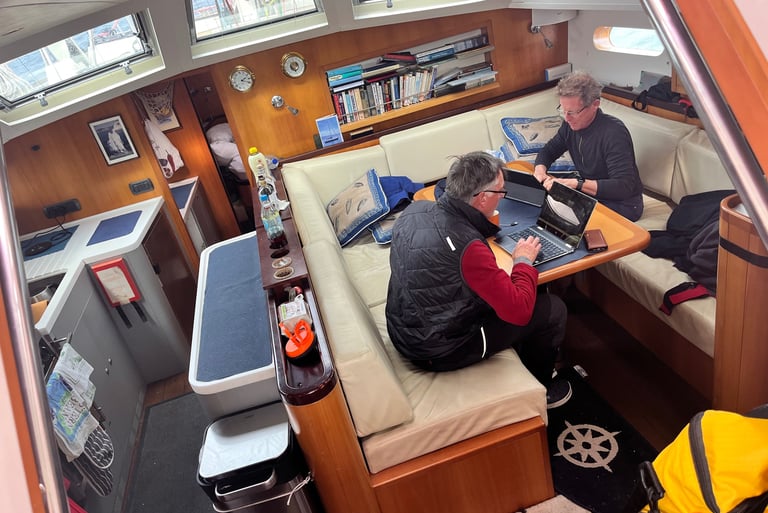
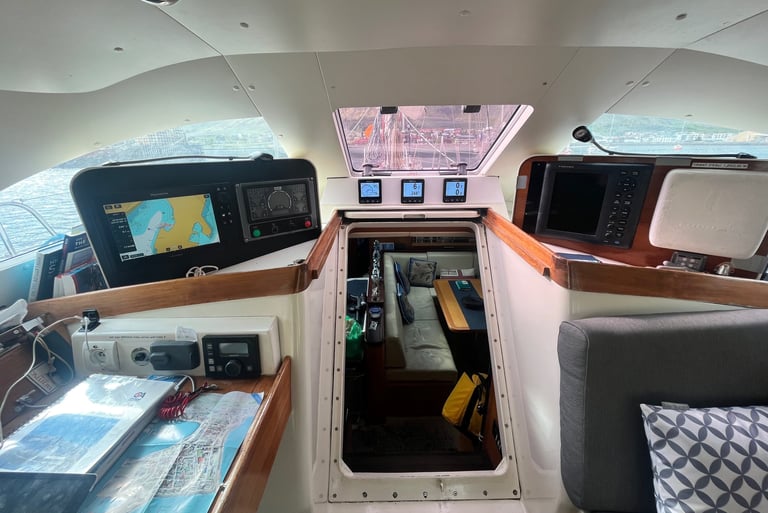
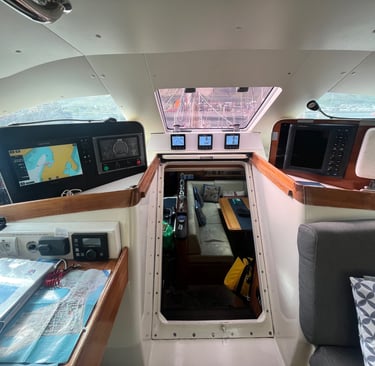
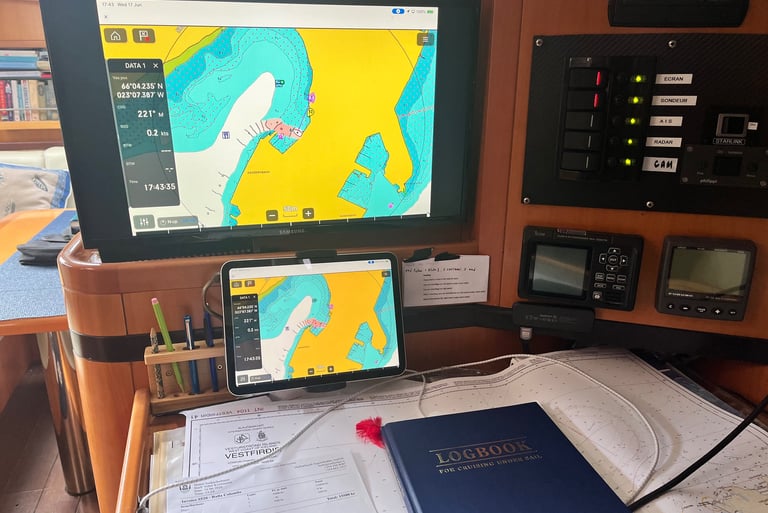
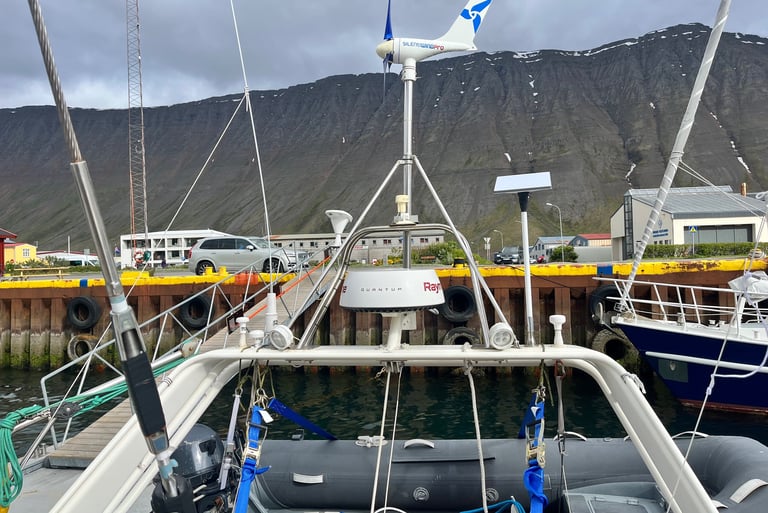
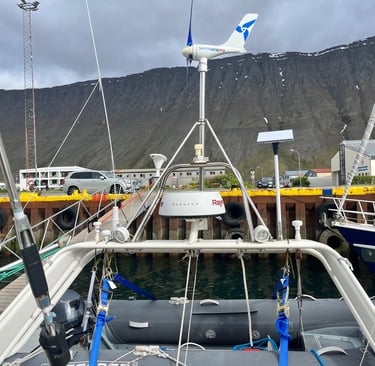
Chart table iPad and screen linked to the Axiom in the cockpit
The cockpit navigation station - Raymarine Axiom chart potterto left, instruments to centre and Furuno radar to right
The antennae on the stern - StarLink Mini on right , radar in centre and whatever the rest does.
Crew hard at work thanks to StarLink
© 2026. All rights reserved.


Please check your inbox for an email request to verify your email