From our Geology Correspondent
Our geologist crewman provides some insights into the scenery
Charles F: 08/07/2026
A Comparison of the Geology of Iceland and the Tasiilaq Area of Greenland
Although it took only two and a half days to sail the 400 miles from Keflavik to Tasiilaq, Belle Colombe has taken us to an area of greatly differing geology. Iceland is one of the youngest landmasses on Earth and is dominated by active volcanism, while the Tasiilaq region contains some of the oldest continental rocks in the world.
The geology of Iceland is controlled by its location on the Mid-Atlantic Ridge, where the North American and Eurasian tectonic plates are moving apart. Iceland is unique because it also lies above a mantle plume, or hotspot, which supplies large volumes of magma. The combination of plate separation and hotspot activity has produced an island built almost entirely from volcanic rocks over the past 16–18 million years. As the plates continue to diverge by approximately 2 cm per year, new basaltic magma rises to the surface, creating fresh crust through frequent volcanic eruptions.
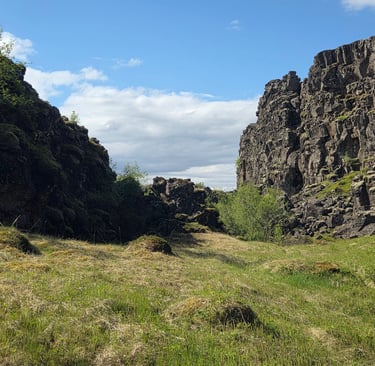
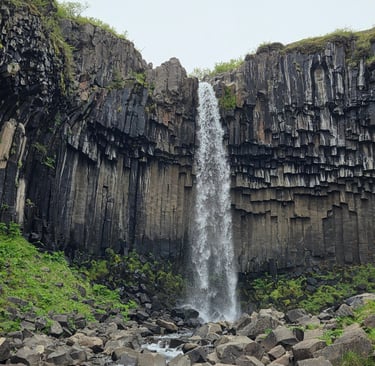
Basalt is by far the most common rock type in Iceland, together with rhyolite, gabbro and hyaloclastite. Successive lava flows, volcanic ash deposits, hyaloclastites formed during subglacial eruptions, and numerous volcanic fissures dominate the landscape. Iceland is also famous for its geothermal activity, including geysers, hot springs and fumaroles, which result from shallow magma heating groundwater. Earthquakes are common because of ongoing plate movement and magma intrusion. The country's geology is therefore dynamic, with volcanic eruptions regularly altering the landscape and even creating new land, as demonstrated by the formation of the island of Surtsey in the 1960s.
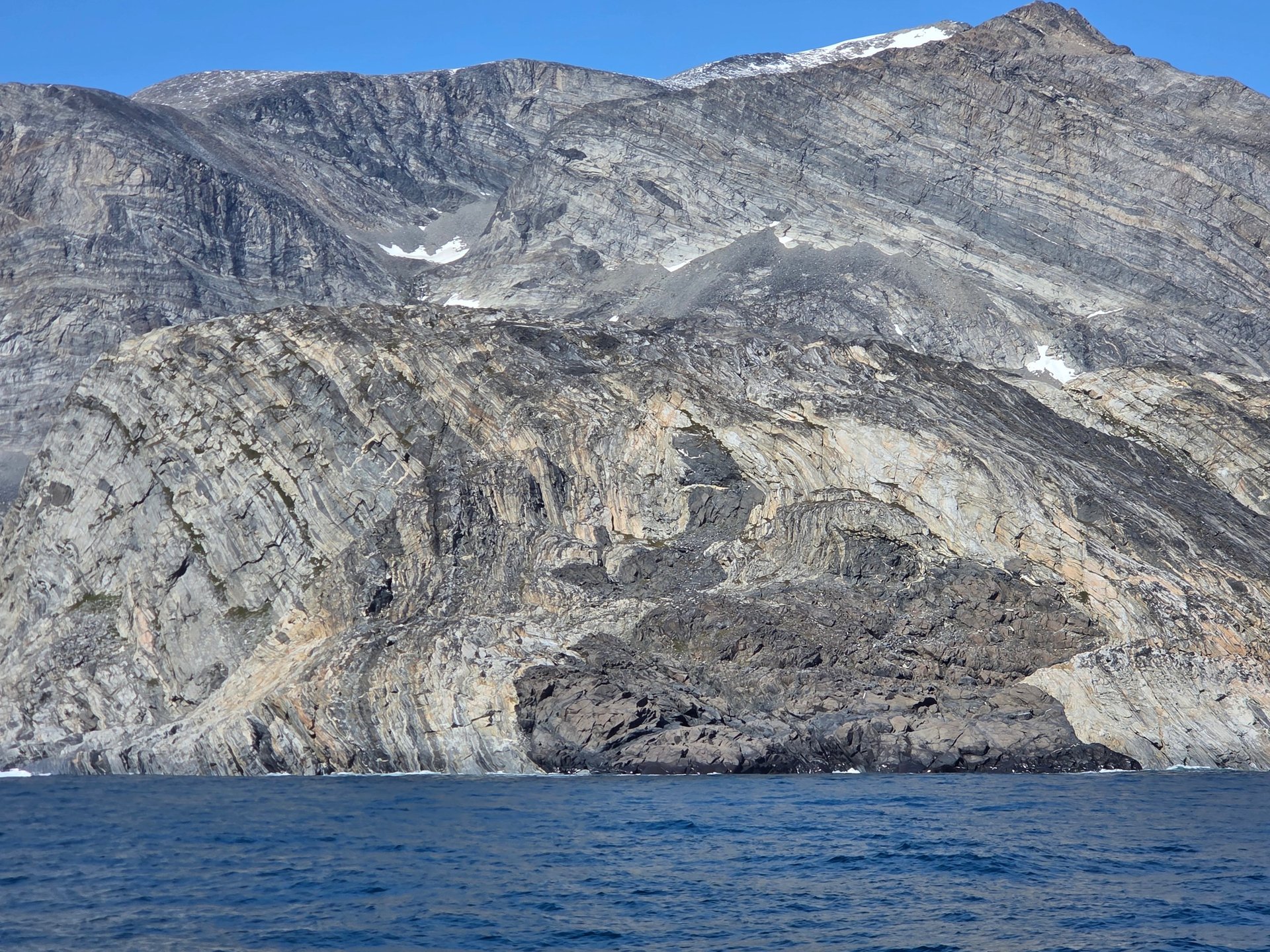
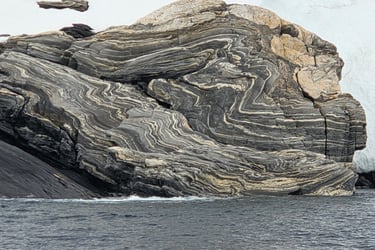
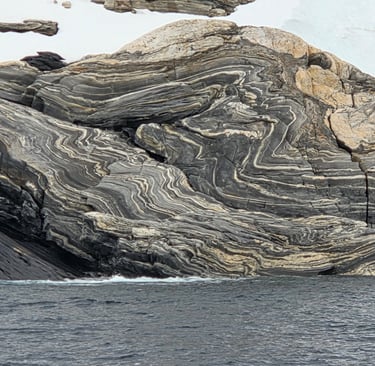
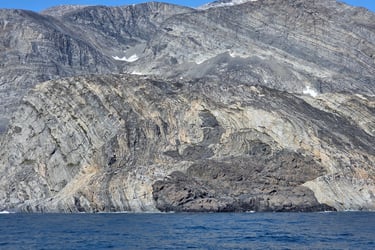
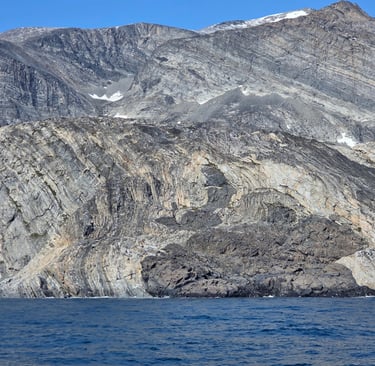
In contrast, the geology around Tasiilaq in east Greenland represents an ancient continental crust that formed nearly two billion years ago during the Palaeoproterozoic Era. The region consists mainly of high-grade metamorphic rocks such as gneisses, amphibolites and schists, together with large intrusive bodies of granite, gabbro and anorthosite. These rocks were formed deep within the Earth's crust and later exposed by uplift and erosion over immense periods of geological time. Much of the region records the Nagssugtoqidian Orogeny, a mountain-building event caused by the collision of the north Atlantic and Rae cratons (ancient continental blocks) around 1.9 billion years ago, which altered the older Archaean bedrock (2.5 to 4 billion years old).
Unlike in Iceland, volcanism is no longer active in the Tasiilaq region. Instead, its geology reflects long periods of tectonic stability, interrupted only by erosion and glaciation. During repeated Ice Ages, glaciers carved deep fjords, steep valleys and rugged mountain peaks that characterise the landscape today. The excellent exposure of bedrock, due to sparse vegetation and limited soil cover, makes east Greenland an excellent area to study geology.
One important similarity between Iceland and east Greenland is that both have been influenced by the opening of the North Atlantic Ocean. Around 55 million years ago, continental rifting separated Greenland from Europe. This event produced extensive faulting and volcanic activity along the East Greenland margin, including large flood basalt eruptions farther north. However, while Iceland remains directly above the active spreading centre and hotspot, Tasiilaq lies on stable continental crust west of the Mid-Atlantic Ridge and no longer experiences active volcanism.
The dominant geological processes differ significantly. Iceland is shaped primarily by volcanism, tectonic extension and geothermal activity, all of which are ongoing today. Tasiilaq, however, is shaped mainly by ancient mountain-building events, metamorphism, intrusive magmatism and long-term erosion. While glaciers influence both regions, glaciers in Greenland expose ancient crystalline rocks, whereas in Iceland they frequently interact with active volcanoes, producing unique landforms and volcanic hazards.
In conclusion, Iceland and the Tasiilaq area illustrate two fundamentally different stages of Earth's geological evolution. Iceland demonstrates how new crust is continually formed at a divergent plate boundary above a mantle plume, resulting in active volcanism and a young volcanic landscape. Tasiilaq, on the other hand, preserves the deep roots of an ancient continent that formed nearly two billion years ago and has since been sculpted by erosion and glaciation.
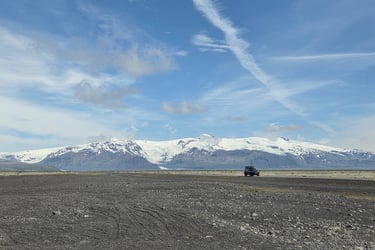
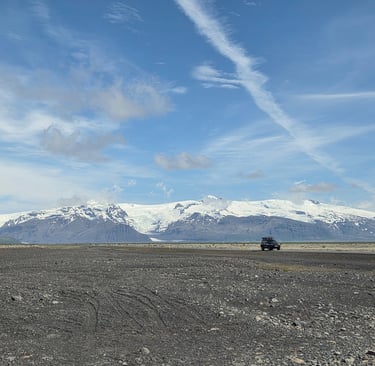
Glacial outwash plain, south Iceland
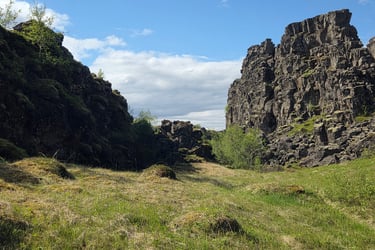
Basalt cliffs at Pingvellir, Iceland
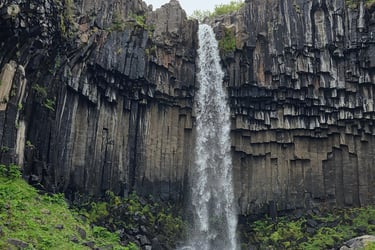
Basalt columns at Svartifoss, Iceland
Migmatitic gneiss, east Greenland
Gneiss and migmatite cliff, showing possible greenlandite inclusion
© 2026. All rights reserved.


Please check your inbox for an email request to verify your email